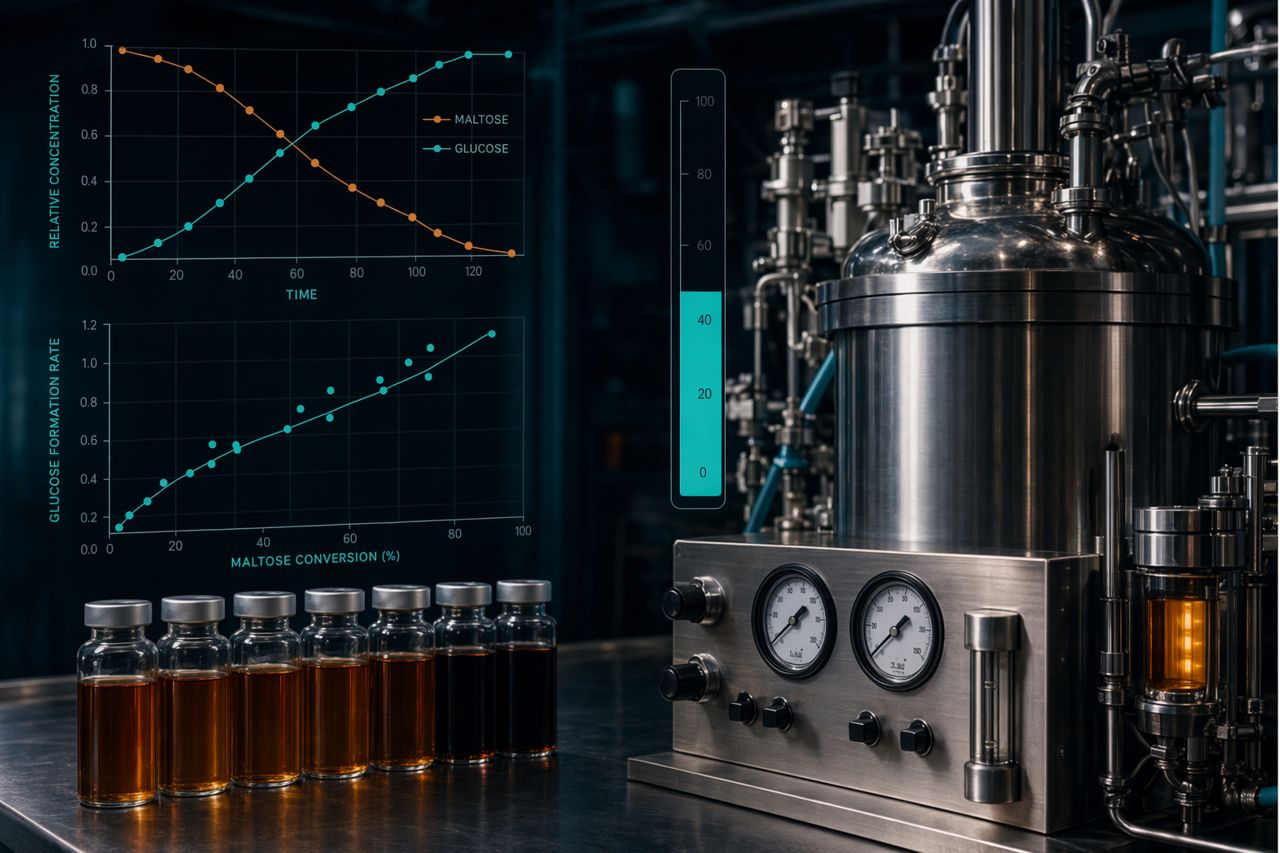
Maltase for Glucose Release in Starch-Derived Syrups
Maltase helps convert maltose-rich process streams into glucose after upstream starch liquefaction and saccharification. For syrup producers, toll processors, ingredient manufacturers, and specialty carbohydrate teams, it offers a controlled way to push maltose hydrolysis without redesigning the entire starch line.
Maltiq supports maltase evaluation for glucose syrup production, fermentation feed preparation, specialty sweetener workflows, and process streams where residual maltose needs tighter control.
Where maltase fits
In starch sweetener processing, upstream enzymes break starch into a distribution of dextrins, maltose, maltotriose, and glucose. Maltase, also known as alpha-glucosidase or maltose glucohydrolase, targets maltose and releases glucose.
Typical integration points include:
Post-saccharification polishing of maltose-rich syrup
Conversion support before evaporation or concentration
Preparation of glucose-forward feeds for fermentation or further bioprocessing
Specialty carbohydrate workflows requiring a defined glucose-to-maltose profile
Process correction where maltose remains higher than specification
What maltase does in the stream
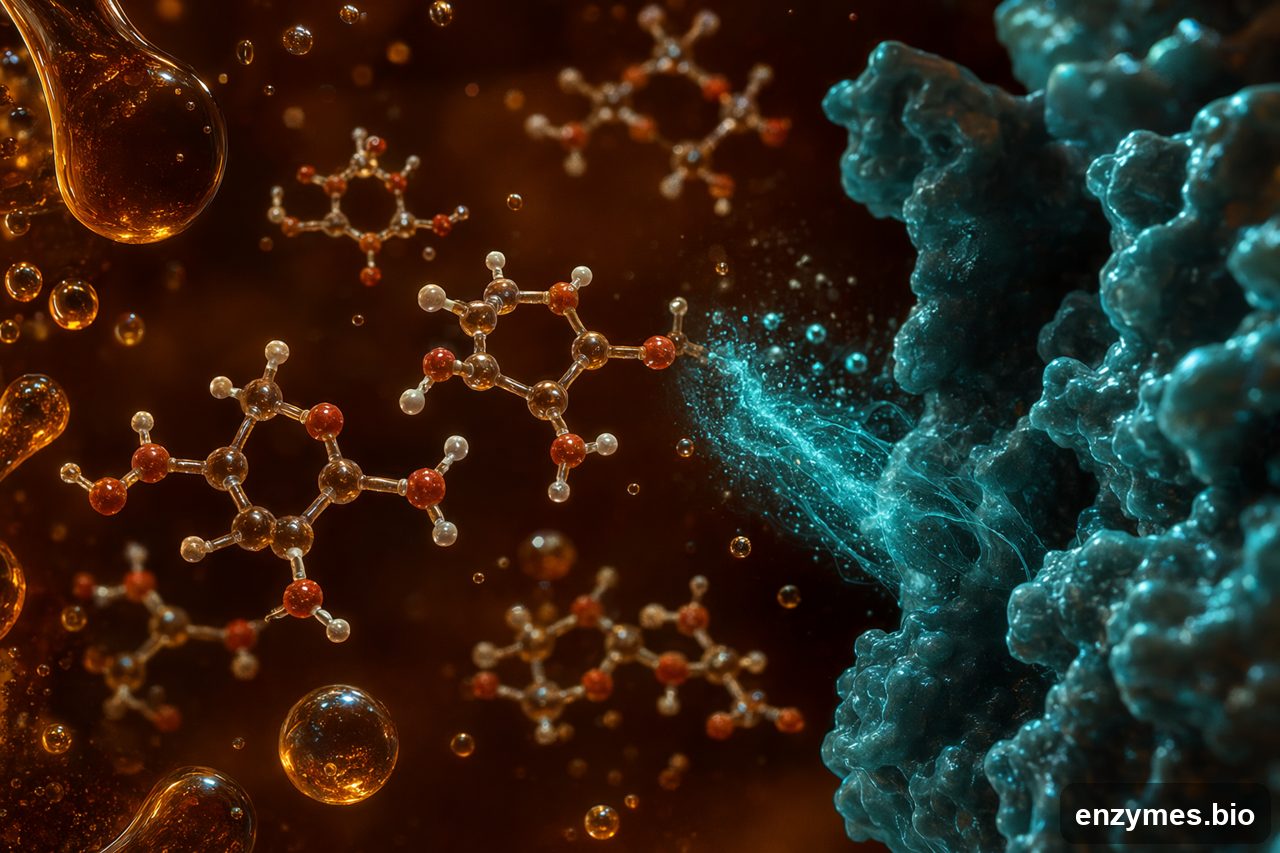
Maltase hydrolyzes maltose into two glucose molecules. In process terms, that can help shift carbohydrate composition, reduce residual maltose, and increase available glucose in a controlled reaction stage.
For manufacturers, the value is not simply enzyme addition. The value is conversion control: substrate profile, contact time, solids loading, pH condition, temperature window, mixing quality, and downstream deactivation all affect the final syrup profile.
Commercial use cases
Glucose syrup production
Maltase can support glucose release from maltose-rich intermediate streams when a higher glucose profile is required. It is especially relevant where upstream processing creates a persistent maltose fraction that affects final syrup specification.
Fermentation feed preparation
Many fermentation platforms benefit from predictable glucose availability. Maltase can help convert maltose into glucose before biological consumption, reducing variability in feed behavior and supporting more consistent substrate planning.
Specialty carbohydrate manufacturing
For specialty syrup and ingredient workflows, maltase provides a selective tool for adjusting maltose-to-glucose balance. It can be used as part of a broader enzyme strategy where the target is a specific carbohydrate distribution rather than maximum generalized hydrolysis.
Rework and specification recovery
When syrup lots trend outside maltose or glucose targets, maltase may provide a process route for controlled correction, subject to compatibility testing and quality review.
Process integration considerations
Maltase performance should be evaluated against the actual process stream, not only a simplified laboratory substrate. Important review points include:
Starting maltose concentration and overall saccharide profile
Dextrin background and residual oligosaccharides
Dry solids and viscosity during treatment
Reaction pH and temperature compatibility
Residence time available in existing tanks or loop systems
Mixing, mass transfer, and heat distribution
Filtration, refining, evaporation, or deactivation steps after conversion
Final syrup specification, including glucose, maltose, color, and sensory constraints where relevant
Maltiq can support pilot planning around these variables so R&D, process engineering, and production teams can determine whether maltase fits the required conversion window.
Procurement and manufacturing fit
For B2B buyers, enzyme selection must work beyond the bench. Relevant evaluation criteria include:
Consistent lot-to-lot process behavior
Compatibility with existing starch sweetener operations
Documentation suited to industrial purchasing and quality review
Practical packaging and handling options
Scale-up support from trial to routine production
Clear communication on lead time, availability, and application fit
Maltiq positions maltase as a process ingredient for controlled glucose release, not as a generic commodity input. The goal is measurable conversion performance under your plant conditions.
Recommended trial path
A practical evaluation usually follows four steps:
Stream review — define substrate profile, process constraints, and target glucose or residual maltose outcome.
Bench screening — compare reaction behavior across relevant plant conditions.
Pilot confirmation — validate conversion, handling, and downstream effects in a representative process setup.
Commercial specification — align supply format, documentation, order cadence, and quality requirements.
This approach helps teams avoid overfitting to idealized lab data and instead confirm maltase performance in the real syrup matrix.
Request maltase pricing or application support
Share your process target and we will route your request to the appropriate technical and commercial contact.