Maltiq · learn
Maltase vs Alpha-Glucosidase: Are They the Same?
Clear buyer-focused guide to maltase, alpha-glucosidase, and related glucosidases for sourcing, specification, and process-fit decisions.
Request pricingPrecision maltose conversion for industrial sugar control.
Maltiq · learn
Clear buyer-focused guide to maltase, alpha-glucosidase, and related glucosidases for sourcing, specification, and process-fit decisions.
Request pricingOverview
Maltase and alpha-glucosidase are closely related terms, but they are not always interchangeable in a sourcing specification.
For industrial buyers, the practical distinction is this:

If your goal is controlled maltose conversion, do not buy by name alone. Confirm substrate profile, process window, formulation format, documentation, and performance behavior in your actual matrix.
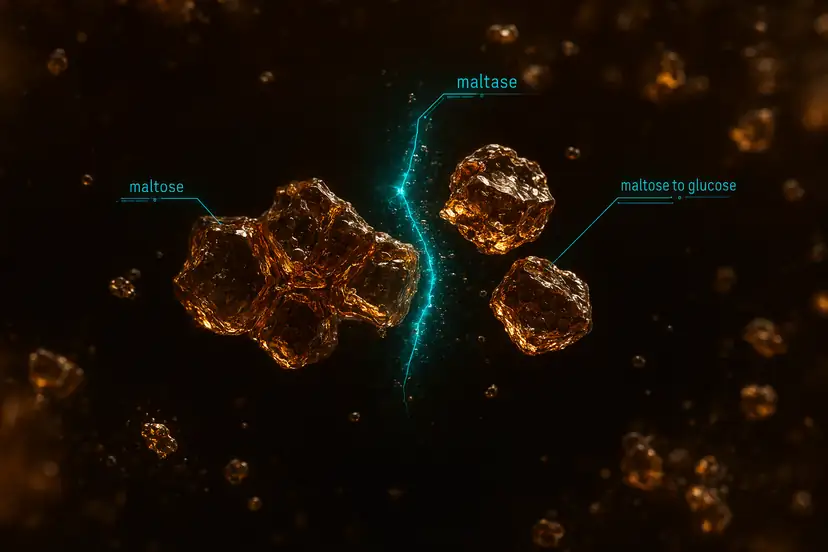
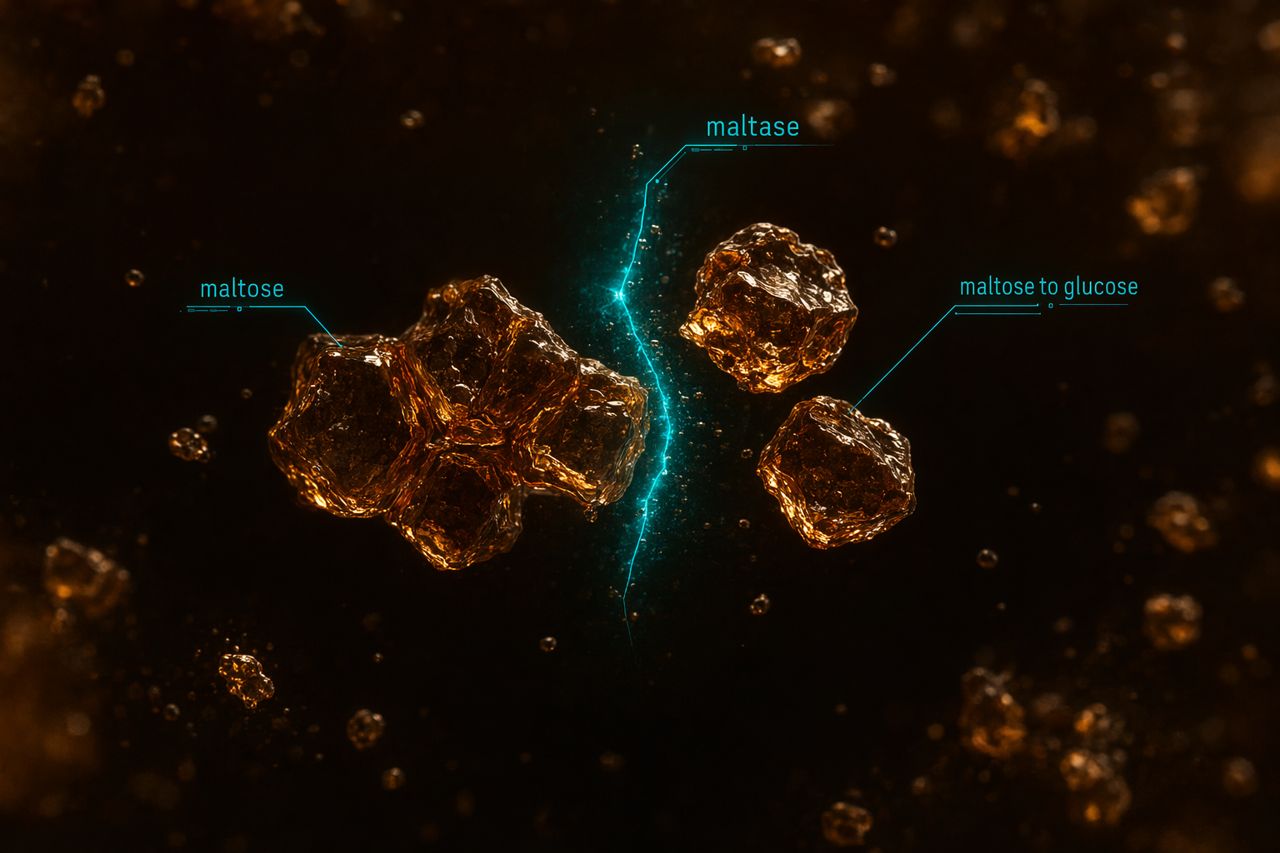
Maltase is commonly an alpha-glucosidase selected for maltose hydrolysis. The enzyme cleaves maltose, a disaccharide made of two glucose units, into two glucose molecules.
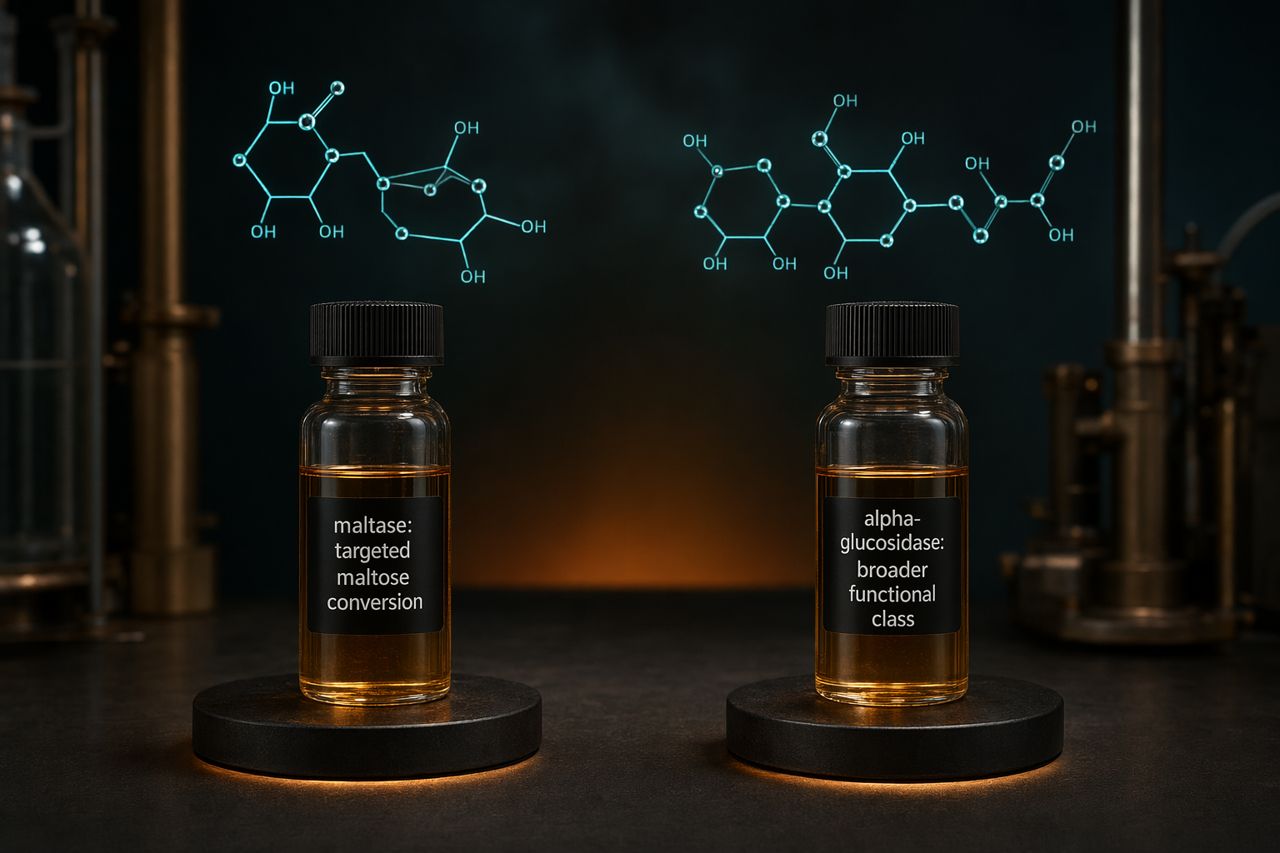
However, alpha-glucosidase is a wider category. Depending on source and design, an alpha-glucosidase may act on maltose, maltotriose, short malto-oligosaccharides, or other alpha-linked substrates. Some products are optimized for broad glucoside activity rather than high-efficiency maltose conversion in a specific production environment.
That is why technical teams should treat the two names as related, not automatically identical.
| Term | What it usually means | Buyer implication |
|---|---|---|
| Maltase | Enzyme used to hydrolyze maltose into glucose | Best term when your specification is focused on maltose reduction or glucose generation from maltose |
| Alpha-glucosidase | Functional class acting on alpha-linked glucosides | Requires confirmation of substrate preference and process fit |
| Maltose glucohydrolase | More formal descriptive name for maltase-type hydrolysis | Useful in technical documentation and regulatory-style descriptions |
| Glucosidase | Broad enzyme descriptor | Too general for purchasing unless narrowed by substrate and linkage |
For clear B2B communication, use the full technical reference when needed:
Maltase (alpha-glucosidase; maltose glucohydrolase)
This keeps R&D, process engineering, QA, and procurement aligned without over-specifying confidential formulation details.
Maltase catalyzes the hydrolysis of maltose into glucose. In production terms, it is used when the process objective is to reduce residual maltose, increase glucose availability, or complete a defined saccharification step after upstream carbohydrate breakdown.
Typical evaluation criteria include:
The useful question is not only “Is it maltase?” The better question is: Does this enzyme deliver controlled maltose conversion in the process you actually run?
Alpha-glucosidase describes an enzyme capable of acting on alpha-glucosidic linkages. Maltose contains an alpha-linked glucose bond, so maltase activity often falls under the alpha-glucosidase umbrella.

But alpha-glucosidase products can vary by:
A product labeled alpha-glucosidase may be excellent for a specific technical use, but it should still be checked against your maltose conversion target before production approval.
Glucoamylase is commonly used to release glucose from starch-derived dextrins and longer carbohydrate chains. It is often part of upstream or broader saccharification systems.
Maltase is narrower in practical use: it is selected when maltose conversion itself is the key control point.
In some processes, both may appear in the same technical discussion. They are not the same purchasing item.
Amylases break starch and dextrins into smaller carbohydrates, often including maltose and related sugars.
Maltase acts further downstream by converting maltose into glucose.
If your process leaves too much residual maltose after amylase treatment, maltase may be evaluated as a finishing or corrective enzyme.
Beta-glucosidase acts on beta-linked glucosides, not the alpha-linked maltose bond targeted by maltase. The similar name can create confusion, but the linkage chemistry and process use are different.
Isomaltase is associated with alpha-1,6-linked substrates such as isomaltose-type structures. Maltase is associated with maltose and alpha-1,4 hydrolysis. If your carbohydrate profile includes both linkage types, confirm the intended activity profile rather than relying on a generic glucosidase label.
Use maltase in your inquiry or specification when your production objective includes:

This term helps suppliers and technical reviewers focus on the correct substrate and expected conversion behavior.
Use alpha-glucosidase when you are searching broadly across technical literature, supplier documentation, enzyme classifications, or regulatory-style references.
Then narrow the discussion with direct process questions:
The name opens the conversation. The process fit closes it.
Before approving a maltase or alpha-glucosidase option, align these items internally:
Target substrate
Confirm whether the key substrate is maltose, maltotriose, mixed malto-oligosaccharides, or another alpha-linked glucoside.
Required endpoint
Define the practical endpoint: residual maltose reduction, glucose increase, fermentability adjustment, flavor-process balance, or downstream yield support.
Process window
Match the enzyme to your actual pH, temperature profile, contact time, solids level, mixing regime, and hold conditions.
Matrix tolerance
Evaluate performance in the real production stream, not only in a simplified lab solution.
Compatibility
Check interactions with other enzymes, salts, sugars, process aids, preservatives, or thermal steps.
Form and handling
Confirm liquid or dry format, dosing practicality, storage expectations, packaging size, and plant handling requirements.
Documentation
Request the documents your QA and purchasing teams need for approval, traceability, and ongoing supply.
Commercial fit
Review lead time, batch consistency, scale-up support, and supply continuity before moving from trial to production.
A broad alpha-glucosidase listing can look correct on paper. The risk is assuming that any alpha-glucosidase will deliver the same maltose conversion pattern under your conditions.
For production use, confirm:
This prevents mismatched trials, unclear results, and avoidable reformulation work.
Maltase and alpha-glucosidase overlap, but they are not automatically the same purchasing specification. Maltase is the more targeted term when maltose-to-glucose conversion is the objective. Alpha-glucosidase is the broader technical class and should be qualified by substrate specificity and process performance.
For industrial use, specify the outcome you need, the matrix you run, and the operating window you control. Then evaluate the enzyme against that reality.
Use the form below to request pricing, availability, and a process-fit review for maltase or alpha-glucosidase requirements. Your inquiry goes directly to Maltiq’s commercial and technical team.
Need help deciding what to write in the specification? Send your current wording and target endpoint. We will help you tighten the inquiry before pricing.
Process

Applications
Enquire
Tell us your application and volume — we reply with pricing and lead time.