Maltase vs Amylase: Different Roles in Starch Conversion
Compare maltase and amylase in industrial starch conversion, including substrate targets, process roles, selection criteria, and when maltase is the right downstream enzyme.
Maltase vs Amylase: Different Roles in Starch Conversion
Amylase and maltase are often discussed in the same conversion workflow, but they do not solve the same problem.
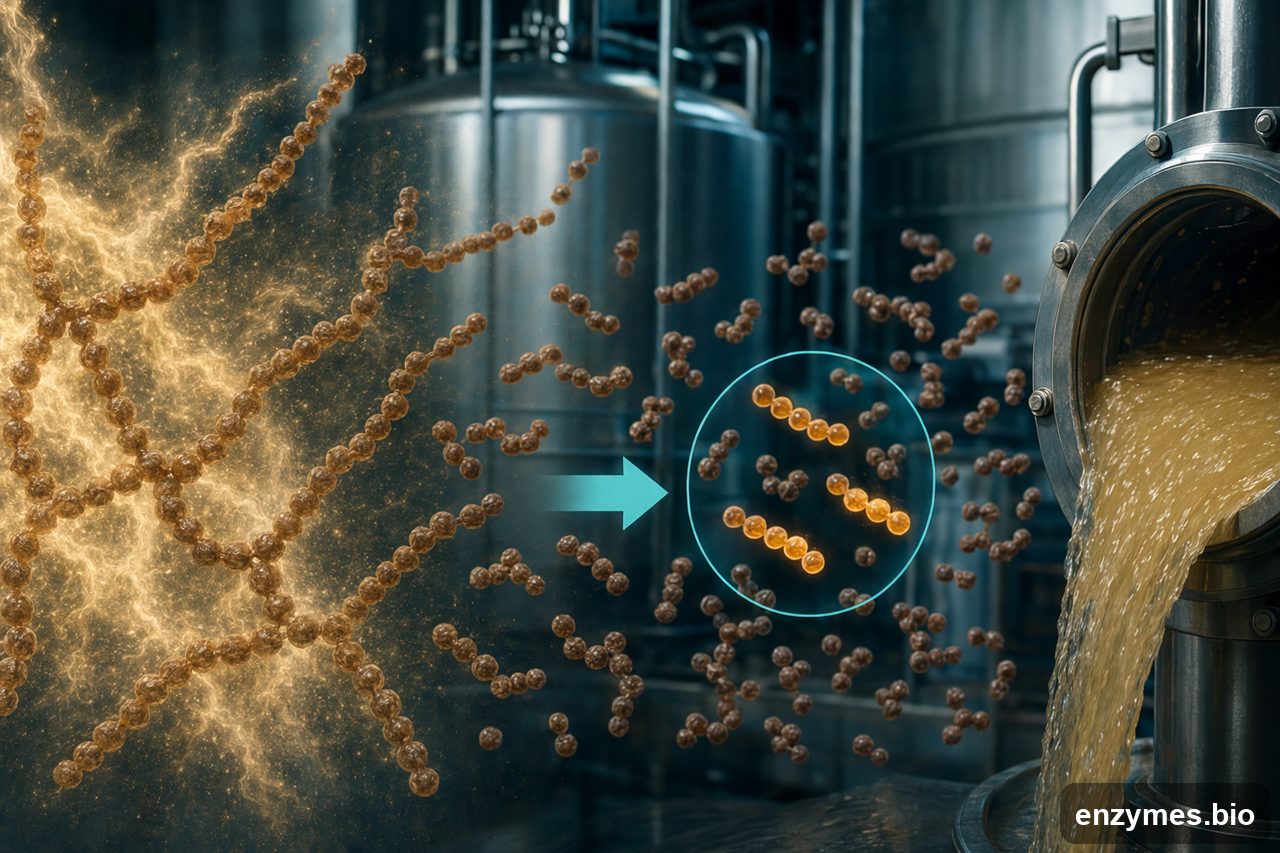
Amylase is typically used to open starch and dextrin structures into shorter carbohydrates. Maltase is more specific: it hydrolyzes maltose into glucose. For R&D, process engineering, procurement, and manufacturing teams, that distinction affects enzyme selection, endpoint control, yield targets, sweetness profile, fermentability, and cost-in-use.
Maltiq focuses on the maltose-to-glucose step: controlled, measurable conversion where residual maltose is the constraint.
The short answer
Amylase works upstream on starch-derived substrates. Maltase works downstream on maltose.
If your process still contains starch or long dextrins, amylase may be the primary tool. If the process has already generated maltose and the commercial objective is higher glucose formation or lower residual maltose, maltase is the more targeted choice.
Maltase vs amylase at a glance
Factor
Maltase
Amylase
Primary role
Converts maltose into glucose
Breaks starch or dextrins into shorter carbohydrates
Main substrate focus
Maltose
Starch, gelatinized starch, dextrins, or related chain structures
Process position
Downstream finishing or conversion-polishing step
Upstream liquefaction, dextrinization, or saccharification support
Typical output
Glucose from maltose
Maltose, dextrins, glucose, and mixed oligosaccharides depending on enzyme type and process design
Best fit
When residual maltose limits yield, sweetness, or fermentability
When large carbohydrate chains must be opened before final conversion
Commercial question
“Do we need more maltose-to-glucose conversion?”
“Do we need more starch breakdown?”
What maltase does
Maltase, also known as alpha-glucosidase or maltose glucohydrolase, catalyzes the hydrolysis of maltose into glucose. In industrial terms, it is a targeted finishing enzyme for streams where maltose is already present and needs to be converted with tighter control.
Maltase is relevant when teams need to:
reduce residual maltose in a syrup, fermentation feed, or processed carbohydrate stream;
increase glucose availability without broadly attacking remaining starch structures;
improve consistency at the conversion endpoint;
tune sweetness, fermentability, or downstream process behavior;
support a more defined carbohydrate profile after upstream conversion.
The value is specificity. Maltase is not a general starch-opening enzyme. It is selected when the maltose fraction itself is the commercial target.
What amylase does
Amylase is a broader category of starch-converting enzymes. Depending on the type, amylase can reduce viscosity, create dextrins, release maltose, or support saccharification. In many process flows, amylase is used before maltase because starch must first be converted into shorter carbohydrate structures.
Common industrial logic looks like this:
Starch is gelatinized or prepared for enzymatic access.
Amylase opens the starch structure and produces shorter carbohydrates.
Maltose may accumulate as part of the conversion profile.
Maltase converts that maltose into glucose when required by the process target.
The key point: using more amylase is not always the same as finishing maltose conversion. If the bottleneck is maltose-to-glucose conversion, a maltase-focused step may be more appropriate than increasing an upstream enzyme.
Where the confusion comes from
Maltase and amylase are connected because both participate in carbohydrate conversion. The confusion starts when teams use “starch conversion” as a single broad category.
In practice, starch conversion is a sequence of different substrate problems:
long-chain starch access;
viscosity reduction;
dextrin formation;
maltose generation;
glucose finishing;
endpoint stabilization.
Amylase addresses earlier chain-cleavage problems. Maltase addresses the maltose finishing problem. Treating them as interchangeable can lead to unnecessary dosage changes, slower optimization, inconsistent endpoints, or procurement specifications that do not match the actual process need.
When maltase is the better specification
Maltase should be evaluated when the process already contains meaningful maltose and the objective is to convert it into glucose with a controlled downstream effect.
Typical triggers include:
residual maltose remains above the desired process target;
fermentation performance is limited by available glucose;
syrup profile requires more glucose and less maltose;
a downstream process responds better to a cleaner glucose fraction;
amylase optimization has improved starch breakdown but not final maltose conversion;
the process needs a finishing enzyme rather than a broader starch-depolymerizing step.
For procurement, this means the purchasing specification should not simply say “starch enzyme” or “amylase alternative.” The requirement should define maltose conversion, operating conditions, formulation format, documentation needs, and packaging expectations.
When amylase remains the right tool
Amylase remains the right choice when the substrate is still starch-rich or dextrin-rich and has not yet been converted into sufficient maltose or smaller sugars.
Use amylase-focused evaluation when the process challenge is:
high starch load;
viscosity reduction;
incomplete liquefaction;
insufficient dextrinization;
poor substrate accessibility;
need for upstream saccharification support.
In these cases, adding maltase too early may not address the limiting step because the maltose substrate has not yet been generated at the required level.
Process selection criteria
When comparing maltase and amylase, the most useful question is not “Which enzyme is stronger?” It is “Which substrate is limiting the process?”
Evaluate the following before selecting the enzyme class:
1. Substrate profile
Identify whether the stream is dominated by starch, dextrins, maltose, glucose, or a mixed carbohydrate profile. Maltase is most relevant when maltose is already a defined target fraction.
2. Process position
Determine whether the enzyme will be used during liquefaction, saccharification, finishing, or a post-conversion adjustment. Maltase typically belongs in the later stages.
3. Operating window
Match enzyme choice to the actual pH, temperature, residence time, and matrix conditions used in production. Avoid selecting based on generic enzyme category alone.
4. Endpoint target
Define what the finished carbohydrate profile must look like. If the key endpoint is glucose formation from maltose, maltase should be part of the technical review.
5. Compatibility with upstream enzymes
Maltase may be used after amylase-driven conversion. The handoff between upstream chain breakdown and downstream maltose finishing is where many process gains are found.
6. Cost-in-use
The lowest purchase price is not always the lowest process cost. A more targeted enzyme can reduce rework, shorten troubleshooting, improve consistency, or simplify the carbohydrate endpoint.
Practical use cases for maltase
Maltiq maltase is relevant for industrial teams evaluating:
glucose-rich syrup profile development;
maltose reduction in carbohydrate processing;
fermentation feed optimization;
brewing or beverage process adjustment where maltose conversion is required;
specialty ingredient manufacturing;
process trials where amylase has completed upstream breakdown but maltose remains a constraint.
Each application should be reviewed against substrate profile, process temperature, pH, hold time, ingredient interactions, and target specification.
Specification notes for buyers
For B2B sourcing, a useful maltase request should include:
application area and substrate source;
current carbohydrate profile if available;
target glucose or residual maltose objective;
process pH and temperature range;
batch or continuous operation;
approximate annual demand or trial quantity;
preferred format, packaging, and documentation needs;
any compatibility requirements with existing amylase or saccharification steps.
This gives technical and commercial teams enough context to recommend a fit without overbroad enzyme matching.
Bottom line
Amylase creates the conditions for starch conversion. Maltase finishes a specific part of that conversion by turning maltose into glucose.
If your bottleneck is starch access, viscosity reduction, or dextrin breakdown, evaluate amylase. If your bottleneck is residual maltose, glucose yield, or downstream conversion control, evaluate maltase.
Maltiq is built for the second case: measured maltose-to-glucose conversion for teams that need a precise finishing step.
Request a quote or get pricing
Use the form below to share your process target, documentation needs, and expected volume. A Maltiq technical-commercial contact will respond through this site’s own inquiry workflow.